
Your agronomy questions answered
A big thank you to everyone who shared their top agronomy questions in our recent agronomy quizzes! Today, we’re diving into three of those questions, providing the timely information you need to make informed decisions. Many of your inquiries were incredibly insightful and require a bit more research to fully unpack. Rest assured, we’re on the case—keep an eye out for those answers in our upcoming newsletters.
What is the Nitrogen (N) loss for fall-applied fertilizer over winter?
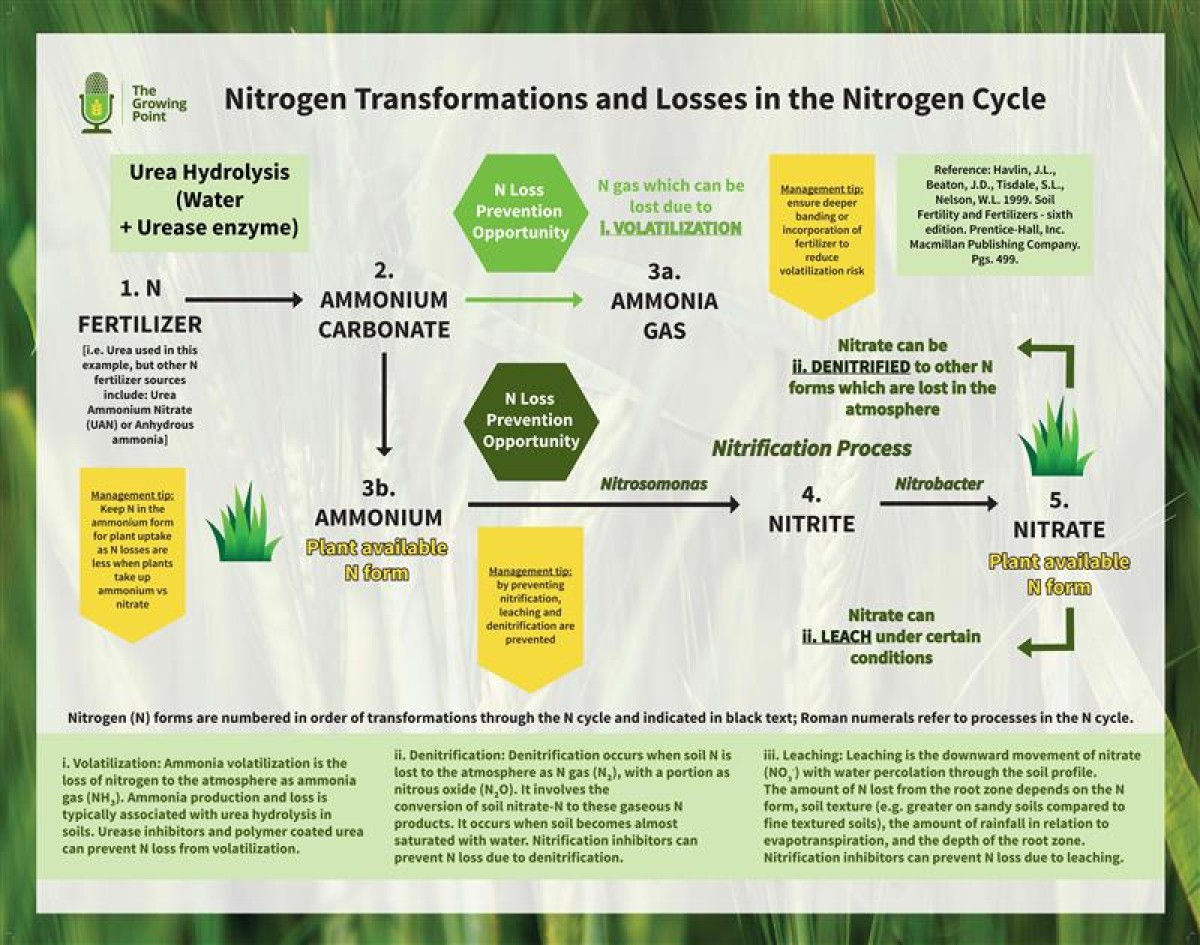
The loss of fall-applied nitrogen (N) fertilizers depends on the fertilizer form and the condition between application and spring seeding. Before we dig into this question, feel free to refresh your knowledge on nitrogen cycle and ways of nitrogen losses in this factsheet:
Nitrogen Transformations and Losses in the Nitrogen Cycle
The most common forms of fall-applied nitrogen and their risks of N loss through denitrification, volatilization and leaching are as follows:
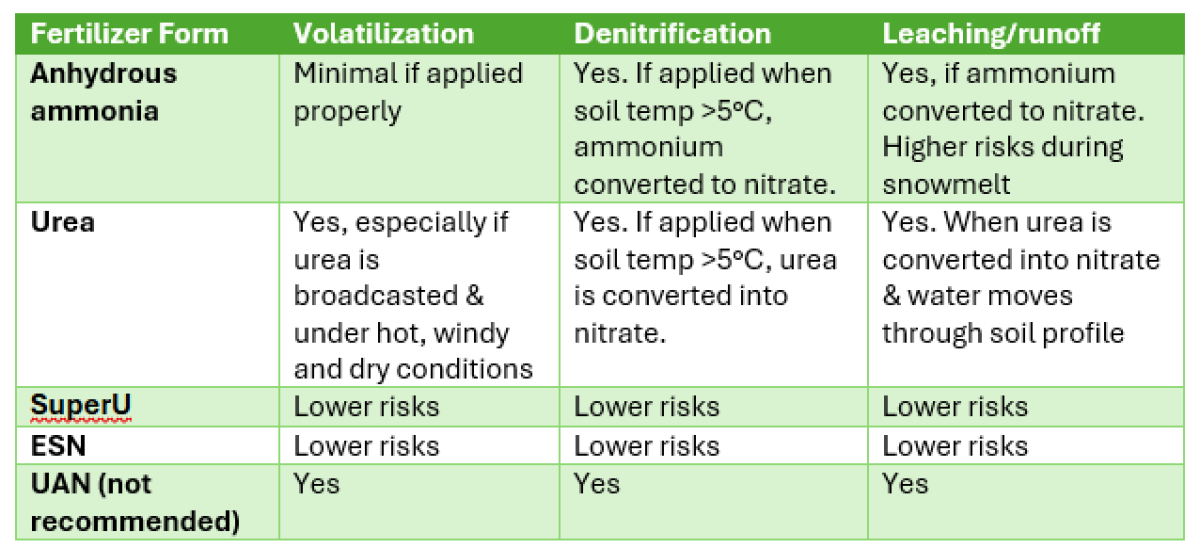
Anhydrous ammonia: The most common source of fall N application. Best practice:
- Apply in late fall, when soil temperature is <5°C. This minimizes soil microbials converting ammonia into nitrate, which is prone to denitrification.
- Deep band into moist soil, close the band well after banding.
Urea: Nitrogen loss can be up to 40% when urea is broadcasted in the fall. Ways to reduce N loss include:
- Deep band into 3-4 inches to reduce volatilization
- Apply when soil is <5°C to minimize denitrification
SuperU: a dual inhibitor EEF product.
- Urease inhibitor reduces volatilization losses
- Nitrification inhibitor reduces losses from denitrification and leaching
ESN: an EEF product that uses polymer coating to reduce N losses. Overall low risks of N loss when applied in the fall
- Not suitable for broadcast. ESN requires water to penetrate the polymer coating to dissolve the urea
UAN: contains around 50% urea, 25% ammonium, and 25% nitrate. Not recommended to be fall-applied.
- Nitrate is immediately prone to N loss through denitrification and leaching
- Urea is prone to volatilization under hot, dry and windy conditions
- Urea and ammonium, if converted to nitrate by soil microbes, are prone to denitrification and leaching
In conclusion, depending on the form of fertilizer, fall-applied nitrogen is prone to N loss through volatilization, denitrification and/or leaching between fall and the following spring. Deep banding, applying late fall when soil temperature <5°C and choosing the proper EEF products are tools available to reduce N losses.
What is my risk of bacterial leaf streak and what can I do to reduce it?
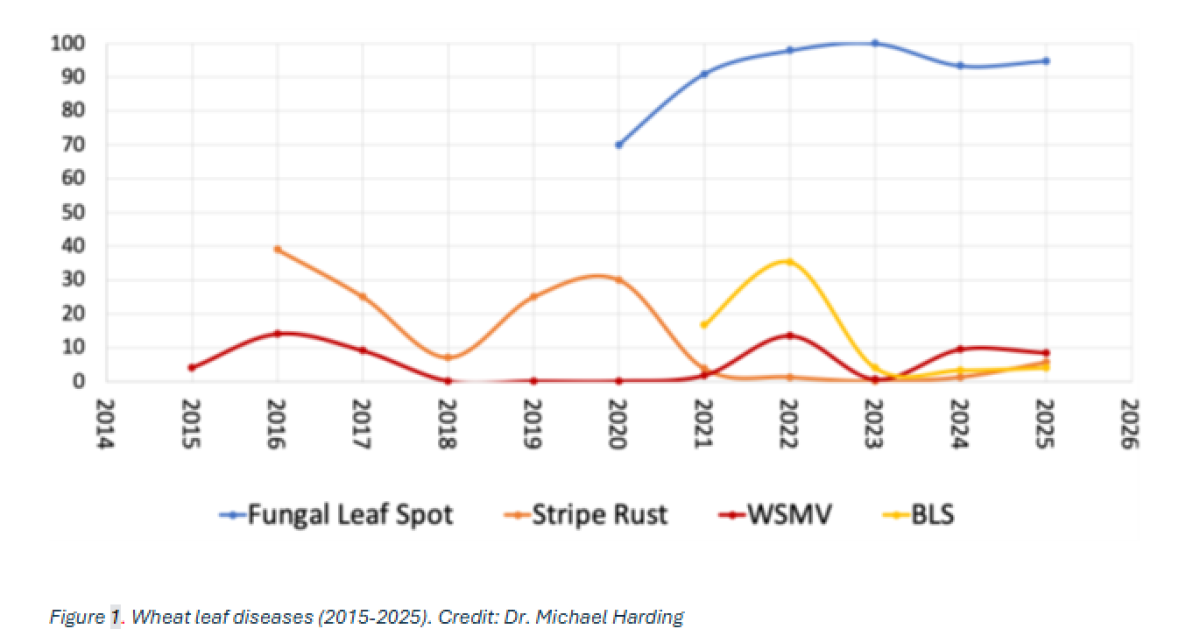
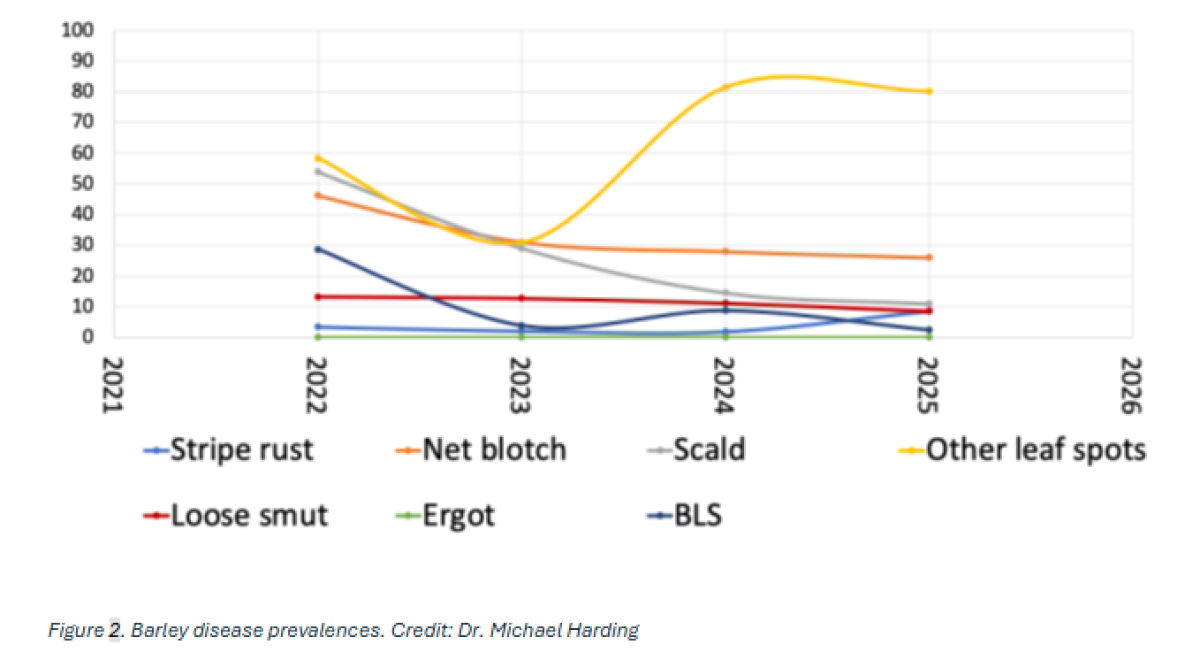
Based on the 2025 disease monitoring survey, led by Dr. Michael Harding, the prevalence of Bacterial Leaf Streak (BLS) is 3% and 2.5% in wheat and barley, respectively. In other words, out of the 250 wheat fields surveyed, 3% had BLS detected, mainly in Southern and Central Alberta. In barley, out of the 201 fields surveyed, 2.5% had BLS detected.
BLS outbreaks are highly impacted by weather conditions. High humidity, rainfall and irrigation encourage the disease development, while hot and dry conditions are not favourable to BLS. At the moment, BLS is still relatively isolated; however, the disease spread is still ongoing and requires awareness and active scouting.
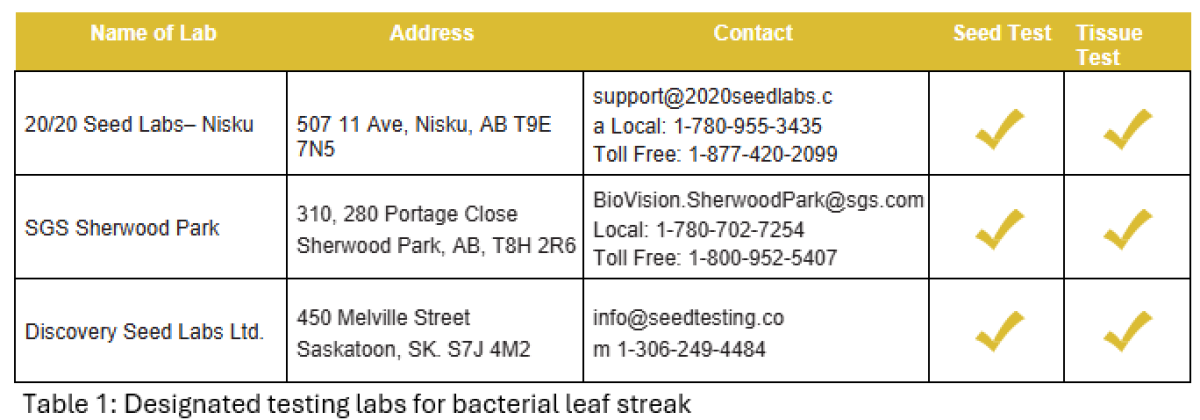
To estimate the risk of BLS on specific farms, the most reliable way is to send seeds to one of the following accredited seed labs to test for BLS. If the seed lot is contaminated with the bacterium, try sourcing bacterium-free seeds if available.
Besides using clean seeds, other management practices to reduce the risk of BLS include:
- Crop rotation with >2 years between cereals. This reduces viable inoculum in crop residues
- Scouting: scout for early signs of BLS, starting from in-crop herbicide timing through to the start of crop dry down. Pay special attention after rain events or high humidity.
- Irrigation management: avoid creating wet conditions in the canopy when not necessary. Specifically, one can irrigate in the evenings when canopy is already wet with dew or allow the canopy to dry out between irrigation events.
For more information on the detection and management of BLS, please refer to the factsheet:
Bacterial Leaf Streak and Black Chaff of Cereal Crops in the Prairies
Nitrogen fixation for cereal grain, is it possible in the future?
The short answer. Researchers are working on it. The upstream research, if successful, will bring cereal varieties closer to nitrogen fixation.
Currently, in the Canadian Prairies, there is one research project by Dr. Alicja Ziemienowicz at Agriculture and Agri-Food Canada. The research group is working on upstream projects for improving nitrogen fixation trait in wheat and triticale. Their goal is to generate improved, stable triticale and wheat varieties with the trait of Biological Nitrogen Fixation (BNF).
In addition, Dr. Linda Gorim is leading a research project on biological nitrification inhibition (BNI) in wheat genotypes. Biological nitrification inhibition (BNI) trait was recently discovered and transferred to wheat genome. This opened up the potential of using genetics to improve nitrogen use efficiency (NUE) of wheat. This research project will evaluate the NUE of the BNI wheat genotypes and how they compare to the current enhanced efficiency fertilizer (EEF) products.
Both research projects are ongoing. We will follow up once the results become available.