
Insect Pest Update - July 2026
Amanda Jorgensen, Insect Management Specialist, Alberta Agriculture and Irrigation
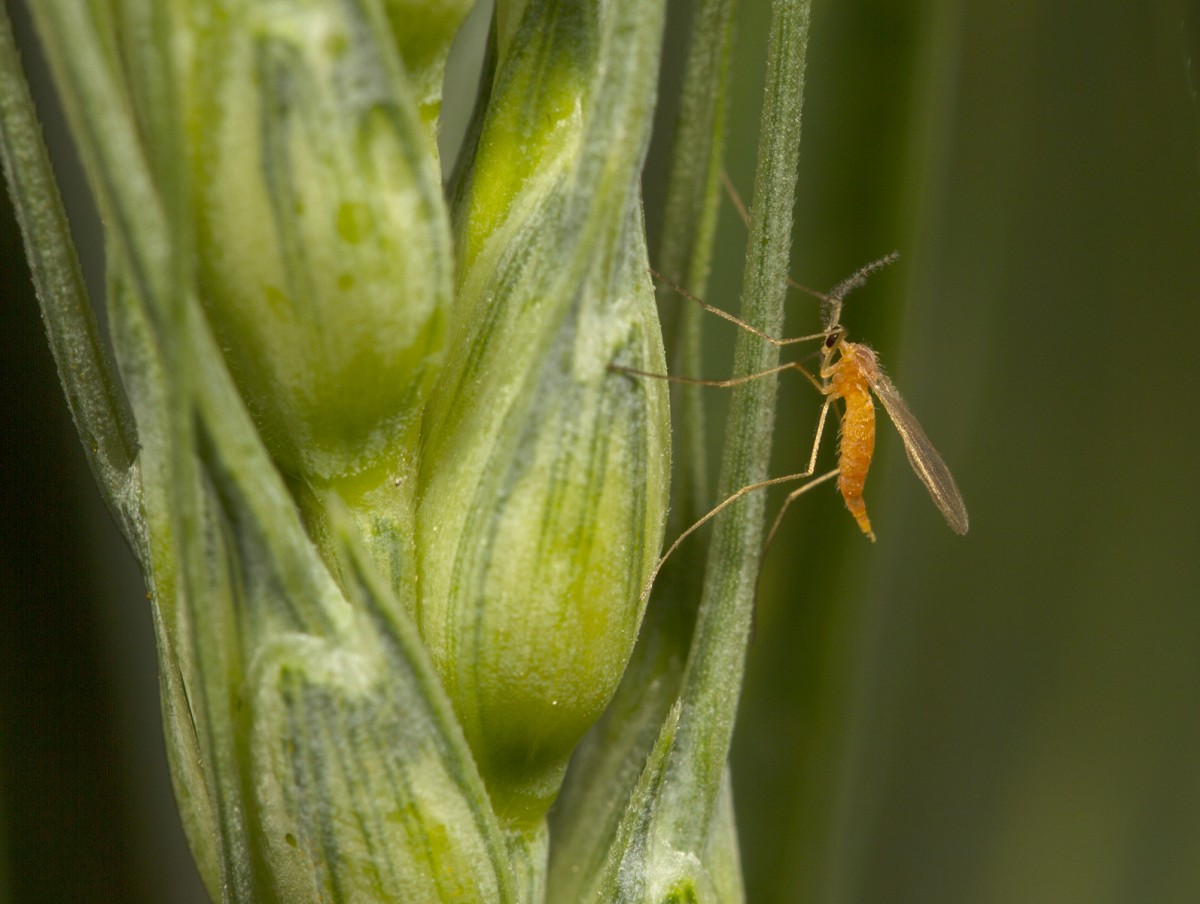
Wheat midge
Moisture conditions across Alberta have been ideal for wheat midge this spring. Flood conditions are very favorable to wheat midge populations. Cool springs with heavy or irregular rainfall also causes wheat midge to emerge over a prolonged period, sometimes with multiple peaks. An extended emergence period will increase the risk of wheat midge activity during the susceptible crop stage (heading).
Wheat midge can remain in the soil for up to 13 years or until soil moisture conditions are ideal. Producers should consider survey maps from multiple years (not just 2025) to determine risk. This is especially true for areas that had dry conditions last year, like the Peace Region and eastern Alberta.
Scouting should start once wheat enters the boot stage and continue until flowering. Count the number of midge adults landing on clusters of wheat heads on a calm, warm evening. To protect yield, the economic threshold is two adult midge for every 8 to 10 wheat heads. To protect quality In fields where production of No. 1 grade wheat is expected, the threshold is one adult midge for every 8 to 10 wheat heads.
See the live map here.
See survey results and read about wheat midge management.
Grasshoppers
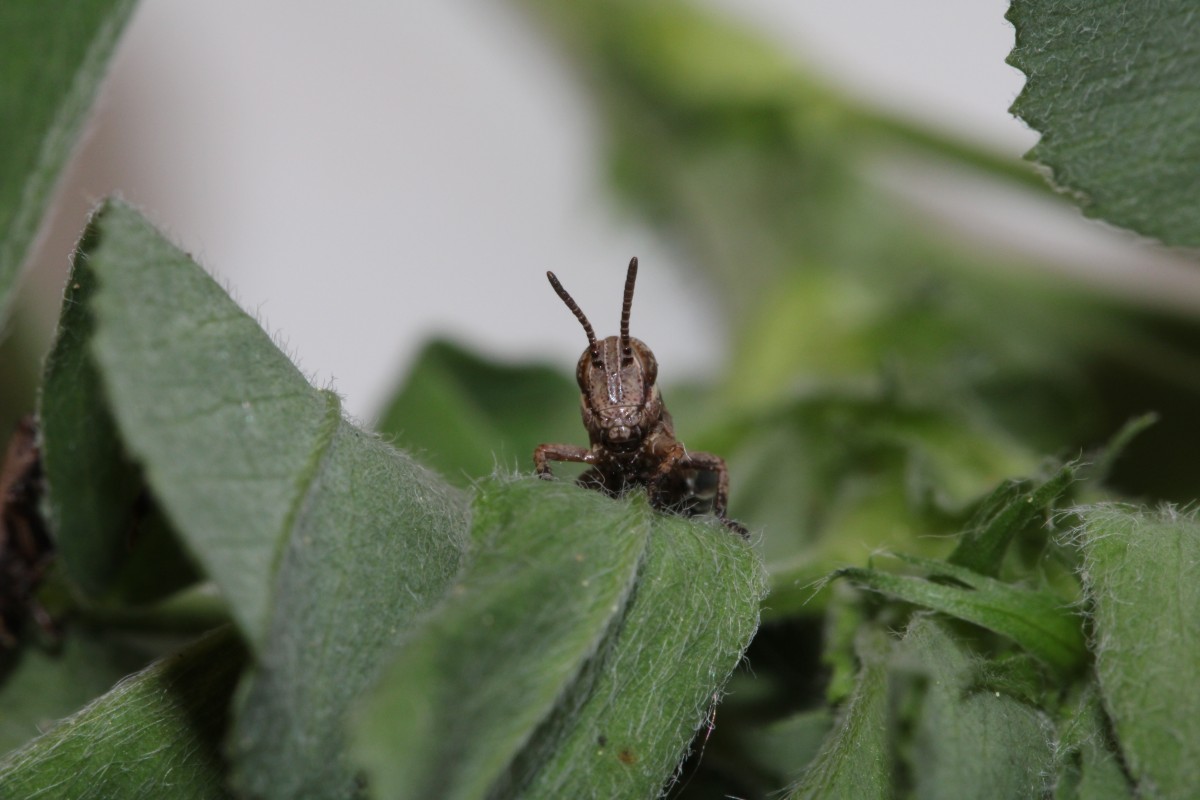
Average grasshopper growth stage across the province was second instar as of June 14. Parts of central and southern Alberta received heavy rainfall immediately after grasshopper hatch began, which will moderate grasshopper risk. Grasshopper nymphs are still present in these areas, however.
Parts of the province that were drier this spring, such as the Peace Region and eastern Alberta, should pay particularly close attention to grasshopper numbers. These regions also had high risk ratings in the 2025 fall survey. Localized high densities can still occur in areas with low regional risk, so scouting remains important.
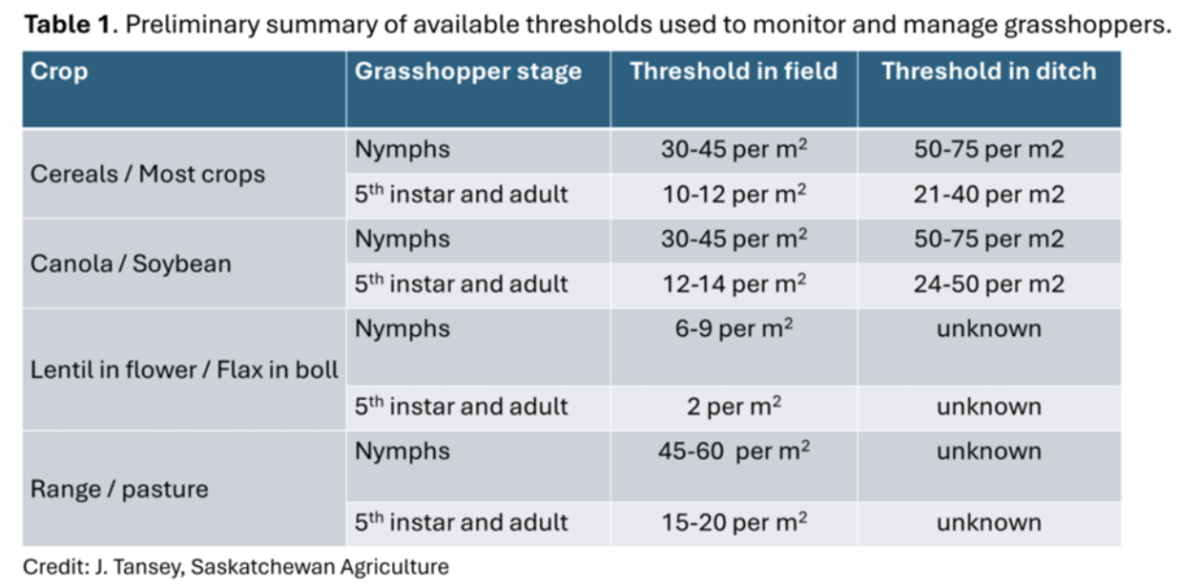
Grasshoppers are most easily controlled in early life stages. Count the number of grasshopper nymphs per square metre along field edges, but sweep sampling is useful to check the ratio of pest species to non-pest species. Place sweep samples in a plastic bag to make identification easier. Non-pest, slant-faced grasshoppers may still be abundant in rainy areas.
Review the PPMN’s grasshopper diversity guide and read more about grasshoppers here.
Wheat stem sawfly
Sawfly adults are active in fields. We are expecting that areas that traditionally see sawfly damage will see moderate damage again this year, particularly in Eastern and South-eastern Alberta. There were high rates of parasitism and disease reported in fall 2025, which should help moderate sawfly damage this year.
Alberta Agriculture and Irrigation will start the annual post-harvest wheat midge and sawfly survey in late August. Interested producers can sign up for the annual survey here.
See the 2025 survey results here.
Cereal leaf beetle
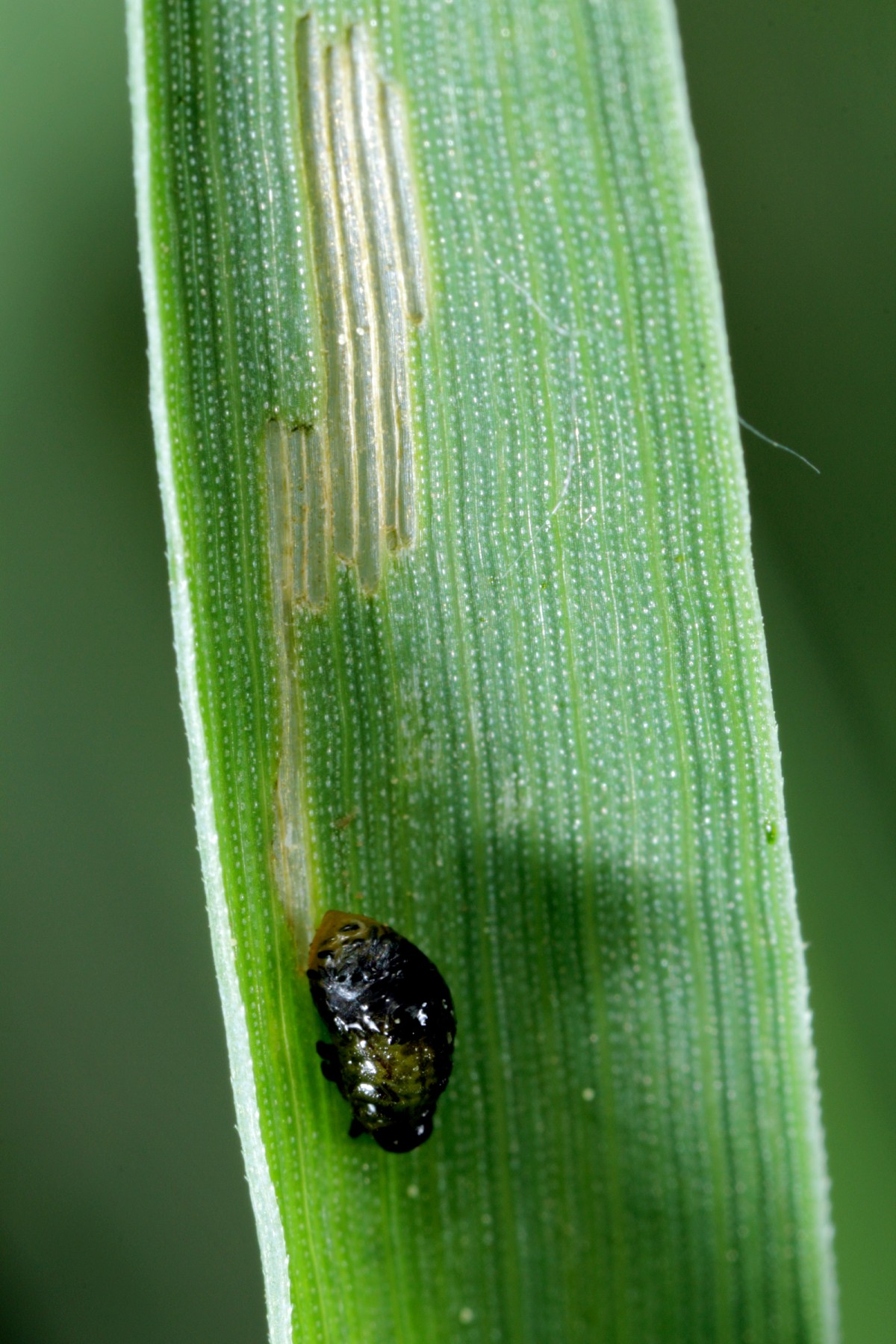
Cereal leaf beetle populations are favored by rainfall. Alberta Agriculture has not yet received reports of cereal leaf beetle larvae, but scouting is still important. Scout for cereal leaf beetle just prior to and at the boot stage.
Read more on cereal leaf beetle scouting.
Aphids
Warm, humid conditions can accelerate aphid population growth. Leaving aphids to their natural enemies (lady bugs, lace wings, hoverflies, and parasites) is usually the best management strategy. It usually isn’t economically beneficial to apply insecticides, but there are thresholds available.
Read more about cereal aphids here.
Wireworms
Fields in southern and central Alberta reported high wireworm populations and damage this spring. There are no post-emergence rescue treatments for wireworms in Alberta. Problem fields can be managed through use of insecticidal seed treatments (if necessary) and rotation to less-susceptible crops.
Identify problem fields now and schedule them for pre-seeding field scouting next season. Download the wireworm field guide here.