

Your agronomy questions answered: September 2026
Thank you to everyone who shared their top agronomy questions in our recent agronomy quizzes! Today, we’re diving into four of those questions, providing the timely information you need to make informed decisions. Many of your inquiries were incredibly insightful and require a bit more research to fully unpack. Rest assured, we’re on the case—keep an eye out for those answers in our upcoming newsletters.
How to time pre-harvest glyphosate?
Grain moisture below 30% is the threshold used to assess pre-harvest glyphosate application timing in cereal crops. At around 30% grain moisture, the plant has reached physiological maturity and no longer transporting biomass into the grains. Pre-harvest glyphosate applied after this stage has minimal risks of unacceptable levels of residue in the grains.
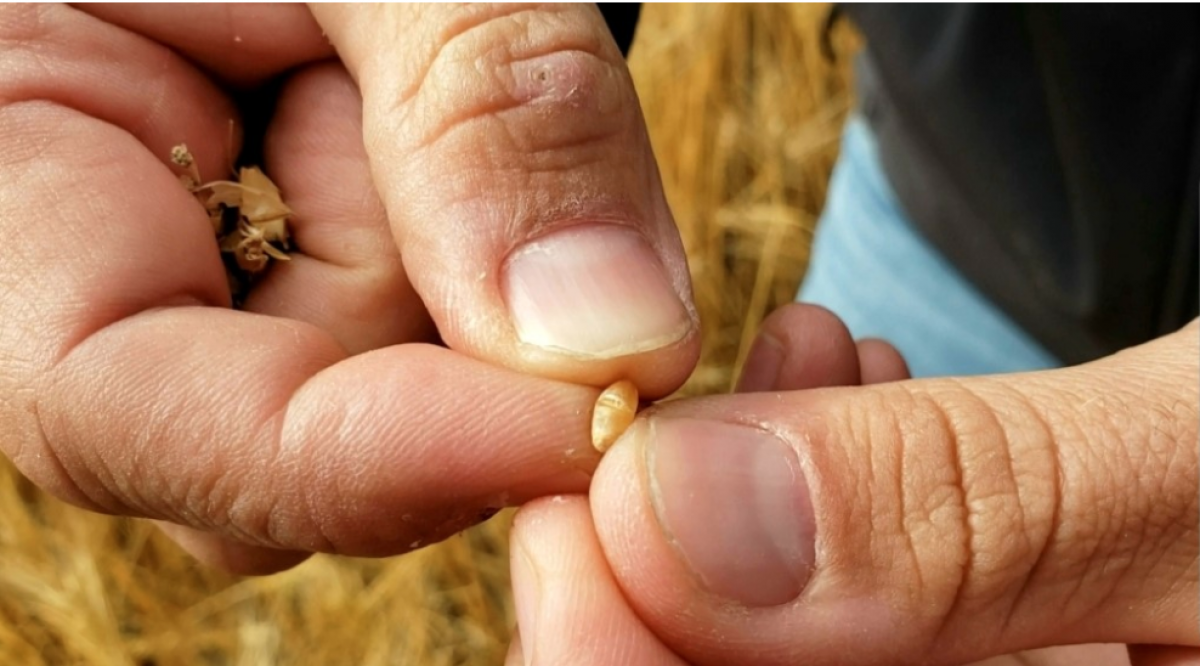
The Thumbnail Test is a simple way to test if grain moisture has reached 30% or below (hard dough). How the test works:
- Press your thumbnail firmly into a kernel taken from the middle of the head or panicle.
- At less than 30% grain moisture, the kernel will feel?firm?and?reasonable pressure will leave a visible dent.
- This condition is commonly referred to as the hard dough stage.
More information can be found on Keep It Clean
What herbicide can I add to my pre-harvest glyphosate to control volunteer Roundup Ready Canola flowering in the crop?
The applicable herbicide products depend on the crop you are managing. If the crop is wheat or barley, the following options may apply.
A couple of things to doublecheck before proceeding:
- Can the product be tank mixed with glyphosate? Refer to product labels to confirm if the product is compatible with glyphosate in a tank mix.
- Is the product registered to use on the specific crop? For example, grain buyers do not accept malt barley if treated with glyphosate or saflufenacil pre-harvest.
- Pay attention to pre-harvest intervals (PHI). Glyphosate is registered for pre-harvest weed control. Do not use as a desiccant. In addition, when tank-mixed with another herbicide, check the PHI of that herbicide product. For example, Heat LQ has PHI of 3 days on wheat and barley if used as pre-harvest weed control.
Some useful resources to make this decision:
- Alberta BlueBook: Available in paper copy, PDF and App forms. Provides complete and up-to-date information on crop protection products.
- Keep It Clean product advisory: highlights the crop production products that pose market risks
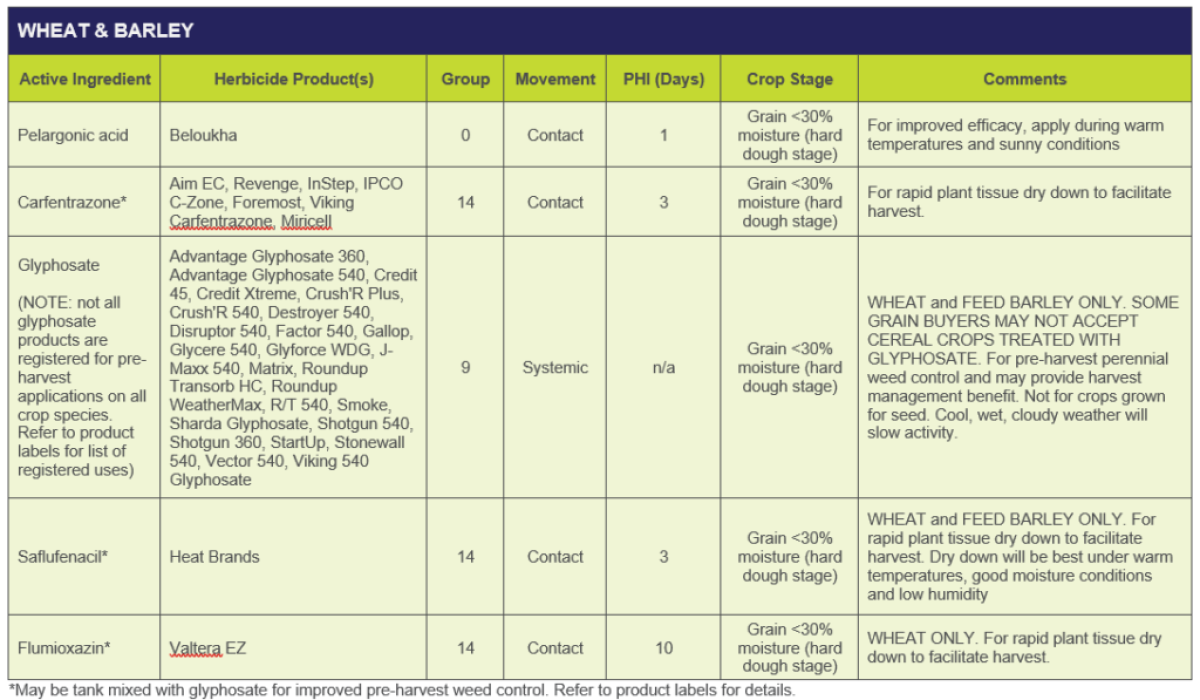
Figure 1. Herbicide for use as pre-harvest aids and desiccants in wheat and barley. Source: Manitoba Crop Alliance
How to deal with regrowth in pedigreed seed fields?
Regrowth that produces late tillers can be a headache to manage, especially in a pedigreed seed field. A mature cereal head may be right next to a head that is still green. There is no magic solution to this challenge. However, a few factors play into the decision of what the best possible solution is.
The solution starts with knowing what you are dealing with, specifically:
- What percent of yield is on the late tillers. In a few spots in the field, count how many heads are early vs late tillers, and the relative sizes of the heads. If the late tillers only account for a small percent of yield (10-15%), then it is more beneficial to prioritize harvesting the mature heads, followed by seed cleaning and grain drying. If late tillers account for higher percent of the grain, consider postponing harvest if the weather forecast look favorable. Swathing is also a good tool if late tillers can reach 30% grain moisture in a reasonable time frame.
- How much later are the late tillers. If late tillers are only 1-2 weeks later than the main crop, and the weather allows, waiting for the late tillers to catch up may be an option. However, if the late tillers are a lot later, the best strategy depends on what percentage of yield is in the late tillers.
Crop species and varieties differ in their ability to withstand sprouting when being left unharvested for longer periods of time. Generally, wheat kernels are harder and relatively less prone to sprouting. On the contrary, barley has a softer kernel that absorbs moisture more quickly, making it more prone to pre-harvest sprouting. Pre-harvest sprouting impacts the germination of the seed, potentially impacting whether the harvested grain can be used as seed or be sold as grain.
Glyphosate is not a solution to this challenge. As glyphosate is systemic, spraying it to green heads risks having the active ingredient migrate to the grains and be “locked in” there. Pre-harvest glyphosate is used as a weed control, not a desiccant. It should only be applied to the plants that have reached physiological maturity (hard dough stage).
Dry the grains immediately if they are harvested at a higher moisture. As it is a pedigreed seed field, pay special attention to the drying temperature. Do not exceed 42°C grain temperature to maintain germination.
How to manage ergot?
For the farms that experienced ergot outbreak last year, ergot is top of mind. The disease is favoured by rain/humid conditions before and during head emergence. Infected grain needs to be cleaned to remove the ergot bodies before using as seed or livestock feed. Ergot bodies from previous years also increase the risk of ergot outbreaks in following years.
If ergot has been found in your grain samples, grain cleaning can be quite effective at cleaning the ergot bodies and improving grain grades. Going forward, there are a lot of tools available to manage ergot, including plant a non-host, control grassy weeds, and more.
Find out more information on ergot at: