
Grain drying and safe grain storage
Thank you to everyone who shared their top agronomy questions in our recent agronomy quizzes!A wet, cool and delayed harvest often raises the question: how do I safely dry and store grains? This question can be broken down into the following:
1. How to dry down grains in an effective and energy-efficient way?
2. At what moisture and temperature is the grain safe for storage?
3. How to monitor the grain during storage?
Natural air drying is a straightforward method to dry the grains. However, this method may take weeks to dry grains to safe storage moisture. Grains harvested at or above 18-20% moisture may spoil before reaching the target moisture under natural air drying. Supplementary heat is required when drying grains at or above 18-20% moisture. To conserve energy using supplementary heat, one can use combination drying, where the process starts with high-temperature drying followed by in-bin drying.
When using supplemental heat, to protect grains from heat damage, keep the air temperature below the maximum safe line.
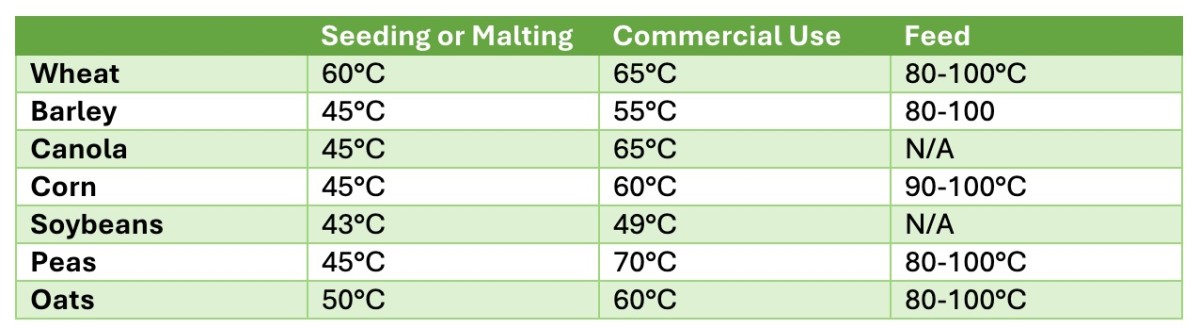
Table 1. Maximum safe air temperature for dryers that do not mix or circulate grains. Source: Canadian Grain Commission
The safe moisture for storage differs by crop and grain temperature. Refer to Canadian Grain Commission for how to prevent spoilage over six months or longer periods in storage
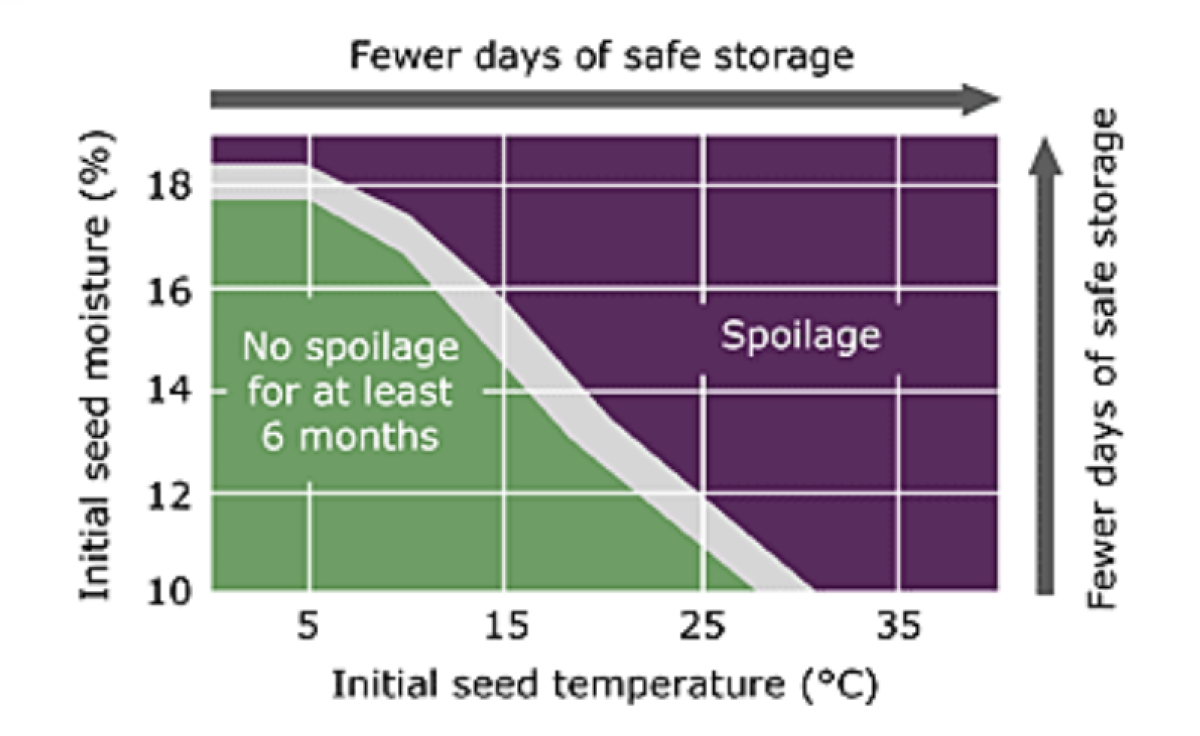
Another key step to prevent spoilage is to monitor grain temperature. Within a grain bin, temperature and moisture are not uniformly distributed. Aeration systems help keep grains cool, dry and prevent condensation in certain spots.
Additional resources:
Drying guidelines – Canadian Grain Commission
Monitoring grain temperature and aerating grain - Government of Canada
Prevent spoilage of stored grain - Government of Canada